Wednesday, June 3, 2026

Latest from Food Politics: American Journal of Public Health series on Ultraprocessed Foods: My Editorial

The American Journal of Public Health has just published a series of papers on ultraprocessed foods to which I contributed this editorial.   These papers are released today as part of the launch of new initiative, Fed UP! aimed at establishing policies ...
‌ ‌ ‌ ‌ ‌ ‌ ‌ ‌ ‌ ‌ ‌ ‌ ‌ ‌ ‌ ‌ ‌ ‌ ‌ ‌ ‌ ‌ ‌ ‌ ‌ ‌ ‌ ‌ ‌ ‌ ‌ ‌ ‌ ‌ ‌ ‌ ‌ ‌ ‌ ‌ ‌ ‌ ‌ ‌ ‌ ‌ ‌ ‌ ‌ ‌ ‌ ‌ ‌ ‌ ‌ ‌ ‌ ‌ ‌ ‌ ‌ ‌ ‌ ‌ ‌ ‌ ‌ ‌ ‌ ‌ ‌ ‌ ‌ ‌ ‌ ‌ ‌ ‌ ‌ ‌ ‌ ‌ ‌ ‌ ‌ ‌ ‌ ‌ ‌ ‌ ‌ ‌ ‌ ‌ ‌ ‌ ‌ ‌ ‌ ‌ ‌ ‌ ‌ ‌ ‌ ‌ ‌ ‌ ‌ ‌ ‌ ‌ ‌ ‌ ‌ ‌ ‌ ‌ ‌ ‌ ‌ ‌ ‌ ‌ ‌ ‌ ‌ ‌ ‌ ‌ ‌ ‌ ‌ ‌ ‌ ‌ ‌ ‌ ‌ ‌ ‌ ‌ ‌ ‌ ‌ ‌ ‌ ‌ ‌ ‌ ‌ ‌ ‌ ‌ ‌ ‌ ‌ ‌ ‌ ‌ ‌ ‌ ‌ ‌ ‌ ‌ ‌ ‌ ‌ ‌ ‌ ‌ ‌ ‌ ‌ ‌ ‌ ‌ ‌ ‌ ‌ ‌ ‌ ‌ ‌ ‌ ‌ ‌ ‌ ‌ ‌ ‌ ‌ ‌ ‌ ‌ ‌ ‌ ‌ ‌ ‌ ‌ ‌ ‌ ‌ ‌ ‌ ‌ ‌ ‌ ‌ ‌ ‌ ‌ ‌ ‌ ‌ ‌ ‌ ‌ ‌ ‌ ‌ ‌ ‌ ‌ ‌ ‌ ‌ ‌ ‌ ‌ ‌ ‌ ‌ ‌ ‌ ‌ ‌ ‌ ‌ ‌ ‌ ‌ ‌ ‌ ‌ ‌ ‌ ‌ ‌ ‌ ‌ ‌ ‌ ‌ ‌ ‌ ‌ ‌ 

By Marion Nestle

American Journal of Public Health series on Ultraprocessed Foods: My Editorial

The American Journal of Public Health has just published a series of papers on ultraprocessed foods to which I contributed this editorial.  These papers are released today as part of the launch of new initiative, Fed UP! aimed at establishing policies to help reduce consumption of ultraprocessed foods and prevent their harm to health.

Press releases for the series and campaign are here and here (longer, more quotes).  

The briefing materials for the series and campaign are here.

The other papers are on the AJPH webpage dedicated to this series; all are open access.

And here is my editorial.

The Politics of Ultraprocessed Foods: Dietary Guidelines for Americans

Marion Nestle, PhD, MPH

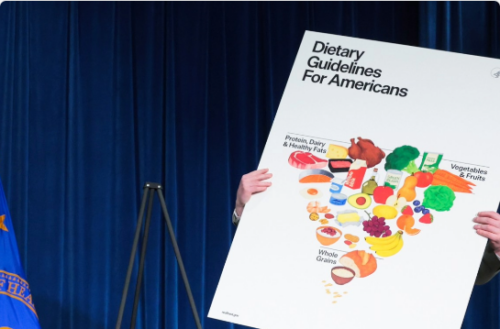
On January 7, 2026, the Trump administration’s Departments of Health and Human Services (HHS) and Agriculture (USDA) jointly released the 2025–2030 Dietary Guidelines for Americans. For the first time since they were established in 1980, these called for “a dramatic reduction in highly processed foods laden with refined carbohydrates, added sugars, excess sodium, unhealthy fats, and chemical additives.” The actual guideline, one of eight, says “Limit highly processed foods, added sugars, & refined carbohydrates.” 1

Although these statements do not use the term “ultraprocessed,” that is clearly what they mean. The guidelines are based on a commissioned scientific foundation report that refers repeatedly to ultraprocessed foods and cites major studies of their health effects.2 Those studies, largely observational, used the Nova classification system to divide foods into four categories based on their degree of processing: unprocessed or minimally processed (Nova 1), processed culinary ingredients (Nova 2), processed (Nova 3), and ultraprocessed (Nova 4).3 The scientific foundation report notes three reasons for avoiding the Nova 4 term: no consensus definition of “ultraprocessed” exists, defining refined starches and sugars as Nova 2 underestimates dietary intake of Nova 4 foods, and the Nova system classifies some nutrient-dense foods as ultraprocessed. On this basis, the guidelines use “highly processed” as a euphemism.

Even so, the very mention of processing in the US dietary guidelines must be considered an important forward step. In advising limits on highly processed foods, HHS and USDA reversed the decision made by the Biden administration’s Dietary Guidelines Advisory Committee (DGAC). That committee judged the category of ultraprocessed to be too ambiguously defined, and the observational evidence for its harm to health too subject to error, to warrant an “eat less” recommendation.4 I view this decision as overly cautious. Yes, observational studies can only demonstrate association, not causation, but of more than 100 studies of ultraprocessed diets and health, nearly all found such diets to increase risks for chronic disease and overall mortality.3

Furthermore, the DGAC excluded consideration of the one exceptionally well-controlled randomized clinical trial available at the time. The participants in that study were housed in a metabolic ward—they could not lie or cheat about what they were eating—and given a diet of either minimally processed or nutritionally comparable ultraprocessed foods. The study results were unexpected and dramatic; the participants consumed an average of 500 calories a day more on the ultraprocessed diet, without realizing it.5 The DGAC eliminated this trial from consideration because it had set criteria for inclusion that required studies to last longer and involve more participants.6 I thought the DGAC should have made an exception for this trial; metabolic ward studies are enormously expensive and few human volunteers are willing to be locked in one for more than a few weeks.

At issue is the preponderance of research; scientists can interpret it differently. The Trump administration’s commissioned research review found “robust and consistent adverse associations between HPF [highly processed food] consumption and a broad range of chronic health outcomes, often in a dose–response fashion,” and concluded that “the current evidence base provides a strong rationale for immediate action at the individual, population, institutional, and policy levels.”7 Many researchers and nutrition professionals, including me, agree with this assessment.8

This guideline is new, but most of the other 2025 dietary guidelines are consistent with long-standing scientific consensus on the benefits of eating more vegetables, fruits, and whole grains, and limiting intake of added sugars, sodium, and alcohol, although they call for greater restriction of sugars and less precise (vague) restriction of alcohol. The guidelines sharply diverge from consensus in recommending a doubling of protein—a euphemism for meat—and in not emphasizing plant foods more strongly. They promote greater intake of meat along with full-fat dairy, butter, and beef tallow, but inconsistently limit saturated fat to 10% of calories.1

The agencies’ fact sheet makes the politics explicit; it uses the word “evangelizing.” Its major point: previous governments have lied to you about dietary risks, and you need to take personal responsibility for what you eat. In doing so, the guidelines reject concerns about health equity—and, therefore, policies that might address social determinants of health—as deserving of consideration.9 Despite promises that the guidelines would be free of conflicts of interest, four of the nine writers of the research reviews report financial ties to meat and dairy industry groups, and three more disclose ties to other food industries.3 The conflicted interests and emphasis on animal-based foods make these guidelines appear to have been captured by the meat and dairy industries.10

I cannot determine whether these guidelines were influenced more by corporate capture or by the personal ideologies of the agency secretaries; they, after all, selected the individuals who wrote the research reviews and are responsible for what the guidelines say. I also do not know how even “highly processed” made it into the guidelines in the face of what surely must have been intense food industry opposition. The food industry, joined by some nutrition scientists, much prefers guidelines based on nutrient content: sugar, salt, fat. Doing so permits the few frequently cited nutrient-dense Nova 4 products—some whole wheat breads, yogurts, and power bars, and plant-based meats—to be considered processed, not ultraprocessed.

Critics of the ultraprocessed concept endlessly invoke the same arguments: there is no scientific consensus on the meaning of the term, and the concept risks undermining “established, evidence-based nutrition strategies,” thereby shifting “the focus away from the most important thing about food which is the nutrition aspect.”11 But thoughtful rebuttals to these arguments note that food misclassifications do not appear to change study conclusions; well-controlled clinical trials have now been repeated with similar, biologically plausible results; the mechanisms of action of ultraprocessed foods are under study; and even “healthy” ultraprocessed foods induce greater calorie consumption.2

Behind food industry arguments is the enormous profitability of ultraprocessed products. Indeed, the very purpose of ultraprocessing is profit maximization—using low-cost ingredients to create irresistible and long-lasting products—so much so that this goal is built into its Nova definition.2,9 The food industry’s objection to the inclusion of processing as a consideration in dietary guidelines comes down to this: eating less is bad for business.

The call for limits on ultraprocessed foods may be groundbreaking in US dietary guidelines, but in 2015, Brazil issued guidelines that included advice to “Make natural or minimally processed foods the basis of your diet.”12 Unlike US guidelines. these were based on the idea that healthy diets should derive from socially and environmentally sustainable food systems. This is a major conceptual difference from the US approach, which emphasizes personal responsibility above all others.

When individuals are deemed entirely responsible for their own dietary intake, government policies need focus only on education. If objections to the guidelines from the food industry have been mild so far, it is surely because its leaders know that education is not enough to change dietary behavior. They much prefer education to policies aimed at regulating product contents and marketing. But to really help people reduce intake of ultraprocessed foods, we need a wide range of policy options—taxes, subsidies, marketing, procurement, product placement13—aimed at making healthier foods more available, accessible, and affordable.

ABOUT THE AUTHOR

Marion Nestle is with the Department of Nutrition and Food Studies, New York University, New York, NY.

Correspondence

Correspondence should be sent to Marion Nestle, Department of Nutrition and Food Studies, New York University, New York NY 10003 (e-mail: marion.nestle@nyu.edu). Reprints can be ordered at http://www.ajph.org by clicking the “Reprints” link.

DOI: https://doi.org/10.2105/AJPH.2026.308530

CONFLICTS OF INTEREST

Marion Nestle earns honoraria from lectures and royalties from books about the politics of food.

REFERENCES

  1. US Dept of Health and Human Services and US Dept of Agriculture. Dietary Guidelines for Americans, 2025-2030.  Available at: https://cdn.realfood.gov/DGA.pdf.  Accessed April 4, 2026.
  2. US Dept of Health and Human Services and US Dept of Agriculture. The scientific foundation for the dietary guidelines for Americans, 2025–2030. Available at: https://cdn.realfood.gov/Scientific%20Report.pdf. Accessed March 4, 2026.
  3. MonteiroCA, LouzadaML, Steele-MartinezE, et al. Ultra-processed foods and human health: the main thesis and the evidence. Lancet. 2025;406(10520):2667–2684. https://doi.org/10.1016/S0140-6736(25)01565-X
  4. US Dept of Health and Human Services and US Dept of Agriculture. Scientific Report of the 2025 Dietary Guidelines Advisory Committee. Dec 2024. Available at: https://www.dietaryguidelines.gov/2025-advisory-committee-report. Accessed April 3, 2026.
  5. HallKD, AyuketahA, BrychtaR, et al. Ultra-processed diets cause excess calorie intake and weight gain: an inpatient randomized controlled trial of ad libitum food intake. Cell Metab. 2019;30(1):67–77.e3. https://doi.org/10.1016/j.cmet.2019.05.008
  6. LaMotteS. They’re up to 70% of the American diet. But the US has no policy on ultraprocessed foods. CNN Health. November 22, 2024. Available at: https://www.cnn.com/2024/11/22/health/ultraprocessed-food-us-dietary-guidelines-wellness. Accessed February 27, 2026.
  7. GoranM. Appendix 4.1. In: U.S. Dept of Health and Human Services and U.S.Dept of Agriculture. Impact of highly processed foods on multiple health outcomes: umbrella review of prior meta-analysis.The Scientific Foundation for the Dietary Guidelines for Americans: Appendices. Jan 7, 2026. Available at: https://cdn.realfood.gov/Scientific%20Report%20Appendices.pdf. Accessed April 3, 2026.
  8. BakerP, SlaterS, WhiteM, et al. Towards unified global action on ultra-processed foods: understanding commercial determinants, countering corporate power, and mobilising a public health response. Lancet. 2025;406(10520):2703–2726. https://doi.org/10.1016/S0140-6736(25)01567-3
  9. US Dept of Health and Human Services and US Dept of Agriculture. Fact sheet: Trump administration resets US nutrition policy, puts real food back at the center of health. January 7, 2026. Available at: https://www.hhs.gov/press-room/fact-sheet-historic-reset-federal-nutrition-policy.html. Accessed February 27, 2026.
  10. NevesFS, NilsonEAF, MendesLL, et al. The 2025–2030 US Dietary Guidelines: an analysis of scientific integrity and global health governance. Lancet Reg Health Am. 2026;56:101402. https://doi.org/10.1016/j.lana.2026.101402
  11. Food Navigator—Europe. Industry takes aim at Lancet’s deadly UPF report. November 20, 2025. Available at: https://www.foodnavigator.com/Article/2025/11/20/lancet-upf-report-sparks-industry-pushback-over-policy-and-evidence-gaps/#:~:text=Most%20question%20the%20scientific%20basis,clarity%20instead%20of%20damning%20reports. Accessed February 27, 2026.
  12. Brazil Ministry of Health. Dietary guidelines for the Brazilian population. 2015. Available at: https://bvsms.saude.gov.br/bvs/publicacoes/dietary_guidelines_brazilian_population.pdf. Accessed February 27, 2026.
  13. ScrinisG, PopkinBM, CorvalanC, et al. Policies to halt and reverse the rise in ultra-processed food production, marketing, and consumption. Lancet. 2025;406(10520):2685–2702. https://doi.org/10.1016/S0140-6736(25)01566-1

The post American Journal of Public Health series on Ultraprocessed Foods: My Editorial appeared first on Food Politics by Marion Nestle

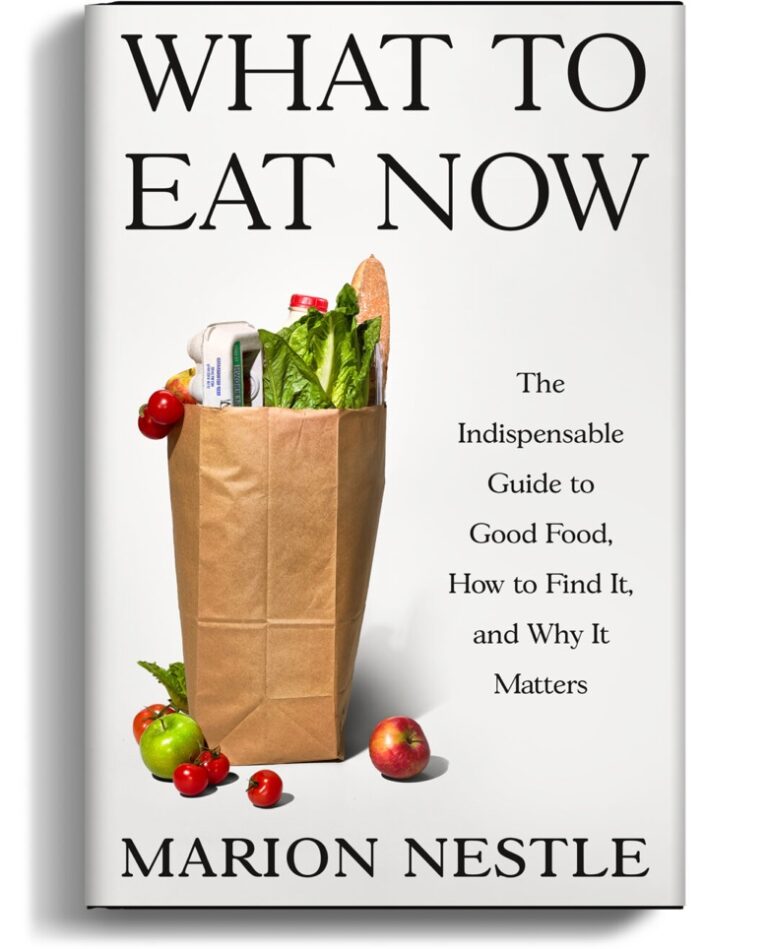
Now Available: What to Eat Now

My new book, What to Eat Now, is officially out!

It's both a field guide to food shopping in America and a reflection on how to eat well—and deliciously.

For more information and to order, click here.

You can explore the full archive of this (almost) daily blog at foodpolitics.comwhere you'll also find information about my books, articles, media interviews, upcoming lectures, favorite resources, and FAQs.


​​​​​​​

Marion Nestle

Paulette Goddard Professor of Nutrition, Food Studies, and Public Health at New York University, Emerita


© Marion Nestle. You're receiving this email because you've signed up to receive updates from us.

If you'd prefer not to receive updates, you can unsubscribe.


No comments:

Post a Comment

Latest from Food Politics: American Journal of Public Health series on Ultraprocessed Foods: My Editorial

The American Journal of Public Health has just published a series of papers on ultraprocessed foods to which I contributed this editorial....