Friday, March 13, 2026

Latest from Food Politics: Weekend reading: the debate about ultra-processed foods

In a previous post, I wrote about the series of papers on ultra-processed foods published in The Lancet (I am a co-author on papers II and III) I.   Science: Ultra-processed foods and human health: the main thesis and the evidence.   II.   Policy: ...
‌ ‌ ‌ ‌ ‌ ‌ ‌ ‌ ‌ ‌ ‌ ‌ ‌ ‌ ‌ ‌ ‌ ‌ ‌ ‌ ‌ ‌ ‌ ‌ ‌ ‌ ‌ ‌ ‌ ‌ ‌ ‌ ‌ ‌ ‌ ‌ ‌ ‌ ‌ ‌ ‌ ‌ ‌ ‌ ‌ ‌ ‌ ‌ ‌ ‌ ‌ ‌ ‌ ‌ ‌ ‌ ‌ ‌ ‌ ‌ ‌ ‌ ‌ ‌ ‌ ‌ ‌ ‌ ‌ ‌ ‌ ‌ ‌ ‌ ‌ ‌ ‌ ‌ ‌ ‌ ‌ ‌ ‌ ‌ ‌ ‌ ‌ ‌ ‌ ‌ ‌ ‌ ‌ ‌ ‌ ‌ ‌ ‌ ‌ ‌ ‌ ‌ ‌ ‌ ‌ ‌ ‌ ‌ ‌ ‌ ‌ ‌ ‌ ‌ ‌ ‌ ‌ ‌ ‌ ‌ ‌ ‌ ‌ ‌ ‌ ‌ ‌ ‌ ‌ ‌ ‌ ‌ ‌ ‌ ‌ ‌ ‌ ‌ ‌ ‌ ‌ ‌ ‌ ‌ ‌ ‌ ‌ ‌ ‌ ‌ ‌ ‌ ‌ ‌ ‌ ‌ ‌ ‌ ‌ ‌ ‌ ‌ ‌ ‌ ‌ ‌ ‌ ‌ ‌ ‌ ‌ ‌ ‌ ‌ ‌ ‌ ‌ ‌ ‌ ‌ ‌ ‌ ‌ ‌ ‌ ‌ ‌ ‌ ‌ ‌ ‌ ‌ ‌ ‌ ‌ ‌ ‌ ‌ ‌ ‌ ‌ ‌ ‌ ‌ ‌ ‌ ‌ ‌ ‌ ‌ ‌ ‌ ‌ ‌ ‌ ‌ ‌ ‌ ‌ ‌ ‌ ‌ ‌ ‌ ‌ ‌ ‌ ‌ ‌ ‌ ‌ ‌ ‌ ‌ ‌ ‌ ‌ ‌ ‌ ‌ ‌ ‌ ‌ ‌ ‌ ‌ ‌ ‌ ‌ ‌ ‌ ‌ ‌ ‌ ‌ ‌ ‌ ‌ ‌ ‌ 

By Marion Nestle

Weekend reading: the debate about ultra-processed foods

In a previous post, I wrote about the series of papers on ultra-processed foods published in The Lancet (I am a co-author on papers II and III)

As might be expected, the papers generated a fair amount of discussion and debate.  The Lancet has now published five letters raising issues about the series, along with a letter of response (which I signed).

Here are the letters:

I.  Ultra-processed foods in research and policy.  David Ludwig argues that the Nova classification of food procesing is imprecise and ideological.

II.  Ultra-processed foods in research and policy:  Dirk Jacobs and Rafael Sampson say the papers look like a campaigning platform to shut down criticism and reject expertise out of hand.

III.  Ultra-processed foods in research and policy:  Gunter Kuhnle says the papers give “insufficient attention to the central methodological challenge of this field: the assessment of UPF intake itself,” a concern because “most of the evidence against UPF relies on observational data.”

IV.  Ultra-processed foods in research and policy: Tatiana Campos and Aintzane Esturo, representing the International Fruit and Vegetable Juice Association, disagree with the classification of reconstituted fruit juices as ultra-processed; they say the juices should be classified as unprocessed or minimall processed (Nova 1, not Nova 4).

V.  Ultra-processed foods in research and policyLilian dos Santos Raha,  Patrícia Chaves Gentil, Gisele Ane Bortolini, Felipe Silva Neves, and Bruna Pitasi Arguelhes point to actions in Brazil that offer “a blueprint for translating these recommendations into binding regulation.”

And here is Ultra-processed foods in research and policy – Authors’ reply   (full text)  Note: I am a co-author.

We thank the authors for their comments and interest in our Series on ultra-processed foods (UPFs) and human health.
We acknowledge David S Ludwig’s concern about the limits of any single classification system. The Nova framework does not replace nutrient science, but adds a complementary layer focused on food processing as a determinant of dietary patterns. Foods, nutrients, additives, and food matrices all matter, and the second Series paper explicitly proposed that all regulations should combine criteria on crucial nutrients with markers of food ultra-processing, rather than treating processing as a stand‑alone metric. Importantly, nationally representative surveys from multiple countries show that the dietary contribution of ultra-processed foods (UPFs) is the main driver of nutrient-imbalanced diets. For example, in the USA, 92·4% of diets excessive in added sugar, saturated fat, energy density, and insufficient in fibre are attributed to UPF consumption. UPFs, therefore, function not as an ideology but as structural drivers of dietary nutrient imbalance, as well as of other determinants of ill health including overeating, exposure to harmful additives and contaminants, snacking, and other harmful eating patterns. Nova explains dietary patterns in ways that nutrient-centric models alone cannot. Critiques based on isolated UPF products overlook the logic of dietary displacement and the relevant counterfactual: fresh and minimally processed foods and cooked meals. We have recently explained why UPF subgroup analyses suggesting differential health effects are conceptually and methodologically flawed, undermining the credibility of nutrition science and risking policy misinterpretation.
Rafael Sampson and Dirk Jacobs of FoodDrinkEurope characterise the UPF industry and industry-funded scientists as impartial brokers of evidence and argue that proposals to limit corporate influence go too far. FoodDrinkEurope’s membership includes many of the world’s largest UPF manufacturers and lobby groups, and the organisation is within a broader network of corporate interest groups that have actively promoted misinformation about Nova and the evidence on UPFs. Based on decades of evidence from food, tobacco, alcohol, and fossil fuel research, we question the credibility of industry-funded science when commercial imperatives conflict with public health goals. Transparency alone is insufficient. The empirical literature shows that disclosure does not neutralise bias, nor prevent the strategic use of funding to manufacture doubt, delay regulation, and frame debate in industry-favourable terms. Safeguards against conflicts of interest are pro-science, not anti-science. Editors exclude conflicted reviewers, governments restrict lobbying, and ethics committees limit funding sources for precisely these reasons. Food and nutrition research should be no exception.
We agree with Gunter G C Kuhnle that evidence on the harms of UPFs was generated using dietary instruments not designed to capture Nova groups. However, exposure misclassification is likely non‑differential in regard to outcomes, and therefore bias associations towards the null. As dietary tools for assessing food consumption aligned with Nova are adopted, associations strengthen rather than weaken. Misclassification has a greater effect on UPF subgroup analyses than on UPF-pattern analyses. Aggregating all UPFs partly mitigates food‑level measurement error, whereas attempting to distinguish fine subgroups with imperfect instruments amplifies instability, multiple testing, and false positives.
Tatiana Campos and Aintzane Esturo argue that reconstituted fruit juices should be treated as minimally processed. These products differ in matrix integrity, intrinsic fibre, and typical consumption patterns. Concentration, storage, reconstitution, and flavour restoration involves losses and reformulation that place these products beyond minimal processing. Some UPFs might perform better than others in specific comparisons, and relative harms might be modest in narrow contrasts. Policy, however, cannot be built on marginal cases. The relevant issue is displacement at scale: when reconstituted juices replace fresh fruit or freshly prepared juices, dietary quality deteriorates.
Gisele Ane Bortolini and colleagues illustrate how Nova can be operationalised in real-world policy. Brazil’s National Food Basket shows that processing criteria can coexist with nutrient standards, procurement rules, fiscal instruments, and broader food‑system policies. This directly addresses Ludwig’s concern that Nova is too imprecise for regulation. In practice, it has enabled coherent, multisectoral action adapted to national context rather than a universal, one‑size‑fits‑all template.
The global shift towards ultra-processed dietary patterns is a preventable driver of chronic disease, and effective policy action should prioritise protecting and restoring diets based on fresh and minimally processed foods and cooked meals. We continue to welcome any scientific inquiry related to the Series that might contribute to strengthening food policies for all.

Competing Interests

The Lancet Series on ultra-processed foods and human health was supported by funding from Bloomberg Philanthropies through a contract with Deakin University and subcontracts between Deakin and the University of Melbourne, University of Sydney, and University of São Paulo. The funder had no role in the study design, data collection, data analysis, data interpreta-tion, or writing of the Series. CAM was part of the team that developed the NOVA food classification system. BMP declares funding from the Eunice Kennedy Shriver National Institute of Child Health and Human Development, the National Institute on Aging, and Bloomberg Philanthropies, and has consulted for Resolve to Save Lives and the World Bank. PB reports funding from an Australian Research Council Future Fellowship awarded by the Australian Government, and from a Sydney Horizon Fellowship awarded by the University of Sydney. All other authors declare no competing interests.  [Note: I was advised not to include mine, since I do not accept funding from food and beverage companies with interests in this topic.  I do, however, earn honoraria for lectures and royalties from books about the politics of food].
References
1. Scrinis, G ∙ Popkin, BM ∙ Corvalan, C ∙ et al. Policies to halt and reverse the rise in ultra-processed food production, marketing, and consumption. Lancet. 2025; 406:2685-2702
Lancet. 2025; 406:2667-2668

The post Weekend reading: the debate about ultra-processed foods appeared first on Food Politics by Marion Nestle

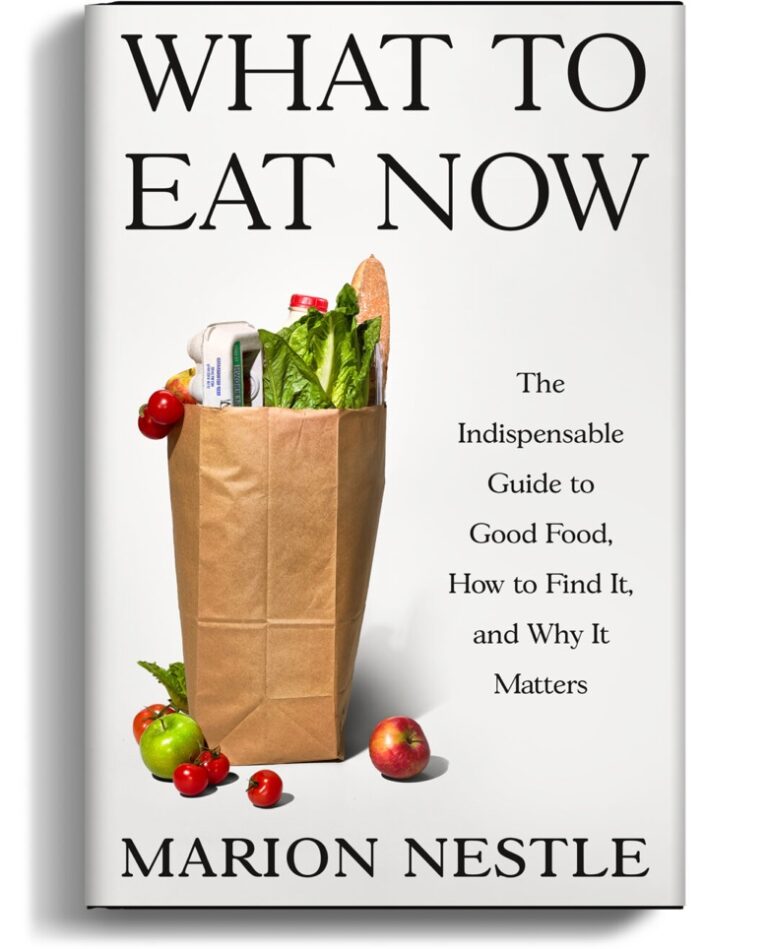
Now Available: What to Eat Now

My new book, What to Eat Now, is officially out!

It's both a field guide to food shopping in America and a reflection on how to eat well—and deliciously.

For more information and to order, click here.

You can explore the full archive of this (almost) daily blog at foodpolitics.comwhere you'll also find information about my books, articles, media interviews, upcoming lectures, favorite resources, and FAQs.


​​​​​​​

Marion Nestle

Paulette Goddard Professor of Nutrition, Food Studies, and Public Health at New York University, Emerita


© Marion Nestle. You're receiving this email because you've signed up to receive updates from us.

If you'd prefer not to receive updates, you can unsubscribe.


No comments:

Post a Comment

Latest from Food Politics: Weekend reading: the debate about ultra-processed foods

In a previous post, I wrote about the series of papers on ultra-processed foods published in The Lancet (I am a co-author on papers II and I...